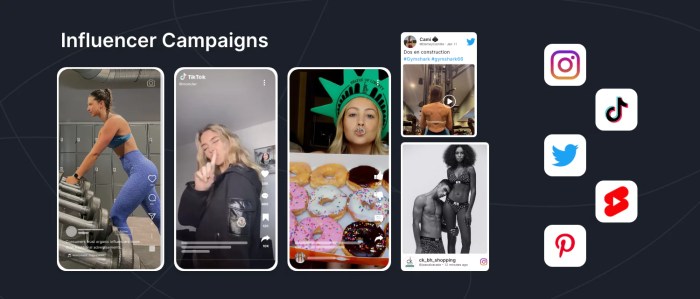
In today’s digital landscape, influencer marketing has emerged as a powerful tool for brands seeking to connect with their target audiences. This strategic approach leverages the credibility and reach of influential individuals to promote products or services, fostering authentic engagement and driving sales. Understanding the nuances of crafting successful campaigns, however, requires a multifaceted approach, encompassing meticulous planning, insightful influencer selection, and robust performance tracking.
This guide delves into the intricacies of influencer marketing campaigns, providing a structured framework for developing and executing effective strategies. From defining campaign objectives and identifying ideal influencers to content creation, budget allocation, and performance measurement, we’ll explore every crucial aspect. We will also address the legal and ethical considerations inherent in this rapidly evolving field, ensuring compliance and maintaining transparency.
Defining Influencer Marketing Campaigns

Influencer marketing is a powerful strategy leveraging the reach and credibility of influential individuals to promote brands and products. It’s a collaborative approach where businesses partner with influencers to connect with their target audience authentically, fostering trust and driving engagement. Successful campaigns require careful planning, execution, and measurement.Successful influencer marketing campaigns hinge on several core components. A clear understanding of the target audience is paramount, ensuring the chosen influencers resonate with their values and interests.
Defining specific, measurable, achievable, relevant, and time-bound (SMART) goals provides a framework for success. A well-defined campaign strategy, outlining the influencer selection process, content creation guidelines, and performance tracking methods, is crucial. Finally, consistent communication and collaboration between the brand and the influencer are vital for a smooth and effective partnership.
Types of Influencer Marketing Campaigns
There are various approaches to influencer marketing, each with its strengths and weaknesses. Selecting the right type depends on the campaign’s objectives and budget.
- Brand Ambassadorships: Long-term partnerships with influencers who genuinely align with the brand’s values. These relationships often involve multiple collaborations over an extended period, building strong brand loyalty and advocacy. For example, a fitness apparel brand might partner with a fitness influencer for a year, featuring them in multiple campaigns and providing them with exclusive products.
- Sponsored Posts: One-off or short-term collaborations where influencers create content (e.g., Instagram posts, YouTube videos, blog articles) featuring the brand’s product or service. These are typically accompanied by clear disclosures indicating a paid partnership. A beauty brand might pay an influencer to review their new mascara in a YouTube video.
- Affiliate Marketing: Influencers promote products through unique affiliate links, earning a commission on each sale generated through their referral. This approach is particularly effective for driving direct sales and tracking ROI. A travel blogger might include affiliate links to hotels and tours in their blog posts, earning a commission on bookings made through those links.
Key Performance Indicators (KPIs) for Influencer Marketing Campaigns
Measuring the success of an influencer marketing campaign requires a focus on relevant KPIs. These metrics help assess the campaign’s impact and inform future strategies.
- Reach and Impressions: The total number of unique users exposed to the campaign’s content. This provides a broad understanding of the campaign’s visibility.
- Engagement Rate: Measures the level of interaction with the content, including likes, comments, shares, and saves. A high engagement rate suggests the content is resonating with the audience.
- Website Traffic and Conversions: Tracks the number of visitors driven to the brand’s website from the influencer’s content and the number of conversions (e.g., purchases, sign-ups). This directly assesses the campaign’s impact on sales and lead generation.
- Brand Mentions and Sentiment: Monitors the volume and tone of brand mentions across social media and other online platforms. Positive sentiment indicates a successful campaign in building brand awareness and improving brand perception.
Identifying Target Audience and Influencers
Successfully executing an influencer marketing campaign hinges on accurately identifying the target audience and selecting the right influencers to reach them. A mismatched audience and influencer pairing can lead to wasted resources and ineffective campaigns. This section details the process of defining the target audience and developing a strategy for finding relevant influencers.
Target Audience Profile: Sustainable Activewear
Let’s consider a hypothetical product: a line of sustainable, ethically-sourced activewear targeting environmentally conscious young adults. Our ideal customer, “Eco-Athlete,” is aged 25-35, predominantly female (60%), with a higher-than-average disposable income. They are highly active, participating in activities like yoga, running, hiking, and cycling. Eco-Athletes are digitally savvy, using social media platforms extensively for information gathering and social interaction.
They are environmentally conscious, prioritizing sustainable brands and products. They value authenticity and transparency from brands, and are likely to engage with content that promotes ethical practices and environmental responsibility. Their lifestyle is health-focused, encompassing both physical and mental well-being. They are influenced by peer recommendations and seek out brands that align with their values.
Influencer Identification Strategy
Identifying relevant influencers requires a multi-pronged approach. We will use a combination of methods to ensure a diverse range of influencers are considered. First, we will define key search terms related to our target audience and product (e.g., “sustainable yoga wear,” “ethical fitness,” “eco-friendly activewear”). These terms will be used to search across various social media platforms (Instagram, TikTok, YouTube) and influencer marketing platforms.We will analyze potential influencers based on several key metrics:
- Reach: The total number of followers or subscribers an influencer has. We will prioritize influencers with a significant reach within our target demographic (25-35 year olds, interest in fitness and sustainability).
- Engagement: This measures the level of interaction an influencer’s audience has with their content (likes, comments, shares). High engagement indicates a loyal and responsive audience, increasing the likelihood of campaign success. We will look for influencers with high engagement rates (above average for their platform).
- Audience Demographics: We will carefully examine an influencer’s audience demographics to ensure a strong overlap with our target audience profile (Eco-Athlete). Tools and platform analytics provide data on follower age, location, gender, and interests.
- Content Alignment: The influencer’s content should align with our brand values and the product’s message. We are looking for influencers who authentically promote sustainability and healthy lifestyles.
- Authenticity: We will prioritize influencers who have a genuine connection with their audience and produce high-quality, engaging content. We will avoid influencers known for inauthentic or overly promotional content.
Influencer Identification Tools and Methods
Several tools and methods can be employed to identify relevant influencers. Each has its strengths and weaknesses.
- Social Media Platform Search: Directly searching relevant hashtags and s on platforms like Instagram and TikTok allows for initial identification of potential influencers. This method is free but requires manual screening and may miss influencers with smaller, highly engaged audiences.
- Influencer Marketing Platforms: Platforms like Upfluence, Grin, and AspireIQ offer databases of influencers, allowing for filtering based on demographics, reach, and engagement. These platforms often provide detailed analytics and streamline the influencer selection process, but they come with a subscription fee.
- Competitor Analysis: Analyzing the influencers used by competitors in the sustainable activewear market can reveal potential collaborators. This method helps identify influencers already successfully engaging with the target audience.
Campaign Planning and Strategy
A successful influencer marketing campaign requires meticulous planning and a well-defined strategy. This involves outlining clear goals, allocating resources effectively, and establishing a realistic timeline for execution. Failing to adequately plan can lead to wasted resources and a diminished return on investment. A comprehensive plan acts as a roadmap, guiding the campaign from inception to completion and ensuring alignment with overall marketing objectives.A robust influencer marketing campaign plan incorporates several key elements, ensuring efficient resource allocation and timely execution.
Effective planning minimizes risks and maximizes the potential for achieving the desired outcomes. This includes careful consideration of budget, timeline, and key performance indicators (KPIs).
Budget Allocation
Budget allocation should be strategic, considering various campaign components. A typical breakdown might include influencer fees (often the largest expense), campaign management fees (including agency fees or internal team costs), content creation costs (photography, videography, editing), platform advertising (to boost reach), and contingency funds for unexpected expenses. For example, a $10,000 budget could allocate $6,000 to influencer fees, $2,000 to content creation, $1,500 to advertising, and $500 for contingencies.
The specific allocation will depend on the campaign’s scale, scope, and chosen influencers.
Campaign Timeline
A realistic timeline is crucial for effective campaign management. This involves breaking down the campaign into phases, assigning deadlines for each task, and ensuring sufficient time for each step. A sample timeline could include: Phase 1 (Weeks 1-2): Influencer selection and contract negotiation; Phase 2 (Weeks 3-4): Content creation and review; Phase 3 (Weeks 5-6): Content rollout and monitoring; Phase 4 (Weeks 7-8): Campaign analysis and reporting.
Flexibility is essential to accommodate unexpected delays.
Key Deliverables
Defining clear key deliverables ensures accountability and measurable results. These deliverables should directly relate to the campaign’s objectives. Examples include: a specific number of social media posts, a target reach and engagement rate, a certain number of website clicks or leads generated, and an increase in brand awareness as measured by social media mentions or website traffic. Regular progress reports against these deliverables are essential for effective campaign management.
Negotiating Contracts and Agreements with Influencers
Negotiating contracts with influencers involves several key steps. First, clearly define the scope of work, including the number of posts, content types, and required deliverables. Second, specify payment terms, including the payment schedule and any bonuses based on performance metrics. Third, address intellectual property rights, clarifying ownership of the created content. Fourth, Artikel the campaign timeline and communication protocols.
Finally, include clauses for termination and dispute resolution. A well-drafted contract protects both the brand and the influencer, minimizing potential disagreements.
Setting Clear Campaign Goals and Objectives
Establishing clear, measurable, achievable, relevant, and time-bound (SMART) goals is fundamental to a successful campaign. These goals should align with broader marketing objectives and provide a framework for measuring campaign effectiveness. For example, a goal could be to increase brand awareness among a specific demographic by 20% within three months, or to generate 500 qualified leads through influencer-driven content.
These goals should inform all aspects of the campaign planning process.
Content Creation and Distribution
Effective content creation and distribution are crucial for a successful influencer marketing campaign. The right content, delivered on the right platforms, will resonate with your target audience and drive engagement. This involves careful consideration of content formats, platform-specific optimization, and a streamlined approval process.
Creating engaging content requires understanding your target audience and the influencer’s style. The content should align with the brand’s message and the influencer’s voice, maintaining authenticity. Distribution involves selecting the optimal platforms for reaching the target demographic and utilizing scheduling tools for efficient content delivery.
Engaging Content Formats
A variety of content formats can be used to maximize reach and engagement. The key is to select formats that best suit the influencer’s expertise and the platform’s characteristics.
- Instagram Stories: Short, visually appealing videos or images with interactive elements like polls, quizzes, and question stickers can drive high engagement. For example, a beauty influencer could use Stories to showcase a makeup tutorial, offering a quick peek at the final look and prompting viewers to ask questions.
- YouTube Videos: Longer-form video content allows for in-depth product reviews, tutorials, or lifestyle vlogs. A tech reviewer, for instance, could create a detailed unboxing and review video of a new smartphone, comparing its features to competitors.
- Blog Posts: Detailed written content is perfect for providing comprehensive information about a product or service. A travel blogger might write a comprehensive guide to a specific destination, including recommendations on accommodation, activities, and local cuisine. This format can be further enhanced with high-quality images or embedded videos.
- TikTok Videos: Short, creative videos that leverage trending sounds and challenges are highly engaging on this platform. A fitness influencer could create a series of short workout videos using trending audio, showcasing different exercises and promoting a healthy lifestyle.
Platform-Specific Optimization
Optimizing content for each platform is vital for maximizing reach and engagement. Different platforms have unique audiences and content formats that influence success.
- Instagram: High-quality images and videos with relevant hashtags are key. Using Instagram Shopping tags allows for direct product purchases within the app.
- YouTube: Compelling thumbnails, engaging titles, and accurate descriptions are essential for discoverability. Utilizing YouTube analytics to track performance and adjust strategies is crucial.
- TikTok: Utilizing trending sounds and hashtags is vital for discoverability. Creating short, catchy videos that capture attention within the first few seconds is crucial.
- Facebook: Engaging captions and high-quality images or videos are essential. Utilizing Facebook’s targeting options to reach specific demographics can significantly improve campaign performance.
Content Approval and Distribution Process
A well-defined content approval and distribution process ensures brand consistency and timely delivery.
- Content Briefing: Provide the influencer with a detailed briefing outlining the campaign goals, target audience, brand guidelines, and desired content formats.
- Content Creation: The influencer creates the content, adhering to the provided briefing and maintaining brand consistency.
- Content Review and Approval: The brand reviews the content to ensure it aligns with the campaign goals and brand guidelines. This may involve multiple rounds of feedback and revisions.
- Scheduling and Distribution: Once approved, the content is scheduled for distribution across the chosen platforms using scheduling tools. This ensures optimal reach and engagement.
- Performance Monitoring: Track key metrics such as engagement, reach, and website traffic to evaluate campaign performance and make necessary adjustments.
Campaign Monitoring and Evaluation
Successfully launching an influencer marketing campaign is only half the battle. Effective monitoring and evaluation are crucial to understanding its performance, optimizing future strategies, and ultimately demonstrating return on investment (ROI). This involves a multifaceted approach encompassing real-time tracking, data analysis, and iterative improvements.Campaign performance tracking and ROI measurement require a blend of quantitative and qualitative data. Quantitative data, such as reach, engagement, and website traffic, provides concrete metrics.
Qualitative data, gathered through sentiment analysis and audience feedback, offers insights into brand perception and campaign effectiveness. Combining these allows for a comprehensive understanding of the campaign’s impact.
Tracking Campaign Performance and Measuring ROI
Several key performance indicators (KPIs) are vital for tracking campaign success. These metrics provide a clear picture of how well the campaign is performing against its objectives. Reach, which measures the number of unique individuals exposed to the campaign, is a fundamental metric. Engagement, encompassing likes, comments, shares, and saves, indicates audience interest and interaction. Website clicks and conversions demonstrate the campaign’s ability to drive traffic and sales.
Brand mentions and sentiment analysis gauge the overall impact on brand perception. Calculating ROI involves comparing the campaign’s cost with the revenue generated or brand value increase. For example, if a campaign cost $5,000 and generated $15,000 in sales, the ROI would be 200%.
Analyzing Influencer Engagement Metrics and Identifying Areas for Improvement
Analyzing influencer engagement metrics involves a deeper dive into the data collected. Identifying which influencers performed best and why is crucial. This might involve examining factors like audience demographics, content type, and posting frequency. Low engagement rates with specific influencers could indicate a mismatch between the influencer’s audience and the target demographic, or subpar content quality. High engagement with certain content formats suggests opportunities to replicate successful strategies.
For instance, if video content consistently outperforms static images, future campaigns should prioritize video. Regular analysis and adjustments ensure continuous improvement and optimal campaign performance.
Comparing Analytics Dashboards for Influencer Marketing
Choosing the right analytics dashboard is essential for effective campaign monitoring. Different platforms offer varying features and capabilities.
| Dashboard | Key Features | Strengths | Weaknesses |
|---|---|---|---|
| Brand24 | Social listening, brand mentions, sentiment analysis | Comprehensive social listening capabilities, detailed sentiment analysis | Can be expensive, steep learning curve |
| Google Analytics | Website traffic, conversion tracking, audience demographics | Free, widely used, integrates with other Google services | Limited social media tracking capabilities |
| Upfluence | Influencer discovery, campaign management, performance tracking | All-in-one platform for influencer marketing, robust analytics | Can be expensive, may require a learning curve |
| Sprout Social | Social media management, analytics, reporting | User-friendly interface, strong reporting features | Can be expensive, limited free plan |
Budgeting and ROI
Effective influencer marketing requires a well-defined budget and a clear understanding of how to measure its return on investment. Allocating resources strategically and tracking key performance indicators are crucial for maximizing campaign impact and justifying the expenditure. This section details budgeting considerations and methods for calculating ROI.
A successful influencer marketing campaign necessitates a comprehensive budget that accounts for all associated costs. Failing to adequately budget can lead to underperforming campaigns or even exceeding allocated funds, hindering overall campaign effectiveness. Accurate budgeting ensures sufficient resources are available to achieve desired outcomes.
Budget Breakdown Example
Let’s consider a hypothetical influencer marketing campaign targeting a new line of sustainable athletic wear. The campaign aims to reach a young, environmentally conscious audience (18-35 years old) on Instagram. The budget is allocated as follows:
| Expense Category | Amount | Notes |
|---|---|---|
| Influencer Fees (3 Micro-influencers) | $3,000 | $1,000 per influencer for sponsored posts and stories. |
| Content Creation (Photography/Videography) | $1,500 | Professional photoshoot and video editing for consistent brand aesthetic. |
| Advertising (Instagram Ads to boost posts) | $1,000 | Targeted ads to increase reach and engagement beyond organic reach. |
| Campaign Management & Analytics | $500 | Time dedicated to campaign planning, execution, and performance tracking. |
| Contingency Fund | $500 | Buffer for unforeseen expenses or opportunities. |
| Total Budget | $6,500 |
Return on Investment (ROI) Calculation Methods
Measuring ROI in influencer marketing requires a multifaceted approach. Several methods exist, each offering unique insights into campaign performance. Selecting the most appropriate method depends on the campaign’s specific goals and the data available.
One common method is to calculate ROI based on sales generated directly attributable to the campaign. This requires tracking unique promo codes or links used by influencers. The formula is:
ROI = [(Revenue Generated – Campaign Cost) / Campaign Cost] x 100%
For example, if the campaign generated $10,000 in sales and cost $6,500, the ROI would be [(10,000 – 6,500) / 6,500] x 100% = 53.85%.
Another method focuses on engagement metrics like likes, comments, shares, and website clicks. This approach is valuable when the primary goal is brand awareness or lead generation rather than direct sales. While harder to quantify directly into monetary value, these metrics can be used to assess the effectiveness of influencer selection and content strategy.
Budget Optimization Best Practices
Optimizing the budget involves strategic resource allocation to maximize campaign impact. Several best practices contribute to efficient budget utilization.
- Prioritize Influencer Selection: Focus on influencers whose audience aligns closely with your target market, rather than solely on follower count. Micro-influencers often offer higher engagement rates at a lower cost.
- Negotiate Influencer Fees: Explore various collaboration models beyond simple sponsored posts, such as affiliate marketing or performance-based agreements.
- Leverage Free or Low-Cost Content: Utilize user-generated content or repurpose existing assets to reduce content creation costs.
- Track and Analyze Data: Regularly monitor campaign performance to identify what’s working and what’s not. Adjust the strategy accordingly to optimize spending.
- Set Clear Goals and KPIs: Defining specific, measurable, achievable, relevant, and time-bound (SMART) goals ensures that the budget is allocated effectively towards achieving the desired outcomes.
Legal and Ethical Considerations
Influencer marketing, while a powerful tool, operates within a complex legal and ethical landscape. Navigating this requires a thorough understanding of transparency requirements, potential pitfalls, and best practices for compliance. Failure to do so can result in significant reputational damage, financial penalties, and legal action.Transparency and disclosure are paramount in building trust with consumers and avoiding legal repercussions.
Consumers need to clearly understand when they are engaging with sponsored content, and influencers have a responsibility to ensure this is evident. A lack of transparency erodes consumer trust and can lead to accusations of deceptive advertising.
Transparency and Disclosure Requirements
Effective disclosure practices are crucial for maintaining ethical standards and adhering to legal regulations. This includes clearly identifying sponsored content through labels like “#ad,” “#sponsored,” or similar phrasing prominently displayed in the content itself. The placement of these disclosures should be unambiguous and easily visible to the audience, regardless of the platform used (Instagram, YouTube, TikTok, blogs, etc.).
For example, a disclosure at the beginning of a YouTube video, clearly visible within the first few seconds, would be more effective than a small, hard-to-see note at the end. Furthermore, influencers should be transparent about any material connections they have with brands, including free products, affiliate links, or monetary compensation. Failing to disclose such relationships can lead to legal issues under advertising standards and consumer protection laws.
Potential Legal and Ethical Challenges
Several legal and ethical challenges are inherent in influencer marketing. One key concern is the potential for misleading or deceptive advertising. Influencers must accurately represent products or services and avoid making false or unsubstantiated claims. For instance, an influencer claiming a weight-loss product caused them to lose 20 pounds in a week, when this is not supported by evidence, could be considered deceptive advertising.
Another challenge lies in ensuring compliance with data privacy regulations, such as GDPR and CCPA. Influencers need to be mindful of how they collect, use, and protect the personal data of their followers. Finally, issues related to intellectual property rights can arise if influencers use copyrighted material without permission. Using a brand’s logo without authorization, for instance, could lead to legal action.
Best Practices for Compliance
To ensure compliance, influencers and brands should develop clear contracts outlining responsibilities, disclosures, and payment terms. These contracts should also address potential liability issues. Furthermore, influencers should maintain accurate records of their collaborations and disclosures. Regularly reviewing and updating their disclosure practices to adapt to evolving regulations and best practices is vital. Seeking legal advice to ensure compliance with relevant laws and regulations in their respective jurisdictions is highly recommended.
Finally, brands should conduct due diligence on influencers to ensure they align with their brand values and have a history of ethical and transparent practices.
Influencer Marketing and Digital Marketing
Influencer marketing is not a standalone strategy; it’s a powerful component within a comprehensive digital marketing ecosystem. Its success hinges on its integration with other digital tactics to amplify reach, enhance brand credibility, and ultimately drive conversions. Understanding how influencer marketing complements other channels is crucial for maximizing return on investment.Influencer marketing leverages the trust and authority influencers have built with their audiences to promote products or services.
This differs from other digital marketing methods that rely on direct advertising or search optimization. Effective integration with these other channels creates a synergistic effect, creating a more holistic and impactful marketing campaign.
Influencer Marketing’s Role in a Broader Digital Marketing Strategy
Influencer marketing acts as a bridge between brands and their target audiences, particularly those difficult to reach through traditional advertising. It provides authentic endorsements and social proof, which can significantly increase brand awareness and drive engagement. By strategically incorporating influencer campaigns within a broader digital marketing plan, businesses can create a more cohesive and impactful brand presence across various online channels.
This approach fosters consistency in messaging and reinforces brand identity across different platforms. For example, a brand might use influencer marketing to generate excitement around a new product launch, while simultaneously employing to improve organic search rankings for relevant s.
Comparison of Influencer Marketing with Other Digital Marketing Tactics
Influencer marketing differs from other digital marketing strategies in its focus on leveraging pre-existing relationships between influencers and their followers. Unlike , which focuses on organic search rankings, or PPC, which relies on paid advertising, influencer marketing uses personal recommendations to influence purchasing decisions. Email marketing, while effective for direct communication, lacks the social proof and trust-building elements inherent in influencer campaigns.
The impact of each approach varies; builds long-term organic traffic, PPC delivers immediate results, email marketing fosters direct customer relationships, and influencer marketing relies on the credibility of the influencer to drive engagement and sales.
Integrating Influencer Marketing with Other Digital Marketing Channels
Effective integration of influencer marketing with other digital channels significantly amplifies campaign reach and impact. A well-coordinated approach ensures consistent messaging and a synergistic effect across platforms.
Here are some key integrations:
- Influencer Marketing & : Influencers can create high-quality content that incorporates relevant s, improving a brand’s organic search ranking. This could involve blog posts, articles, or videos optimized for search engines.
- Influencer Marketing & PPC: Influencer campaigns can be used to target specific demographics identified through PPC data. This ensures that influencer marketing efforts are focused on the most responsive audiences.
- Influencer Marketing & Social Media Marketing: Influencers can promote brand content across various social media platforms, increasing brand visibility and engagement. This synergy allows for broader reach and tailored content for each platform.
- Influencer Marketing & Email Marketing: Influencers can promote email sign-ups, growing the brand’s email list. This allows for direct communication with potential customers who have already shown interest in the brand through the influencer’s recommendation.
- Influencer Marketing & Content Marketing: Influencers can contribute to a brand’s content strategy, creating high-quality content that resonates with their audience and reinforces brand messaging. This collaboration produces authentic and engaging content that strengthens the brand’s voice.
Case Studies and Best Practices
Successful influencer marketing campaigns rely on a deep understanding of the target audience, a strategic selection of influencers, and meticulous campaign execution. Analyzing successful campaigns reveals key strategies and helps avoid common pitfalls. This section explores case studies illustrating best practices and common mistakes to avoid.
Dollar Shave Club’s Viral Video Campaign
Dollar Shave Club’s 2012 launch campaign is a prime example of a highly successful influencer marketing campaign, albeit one that leveraged a single, impactful video rather than numerous influencers. The campaign’s goal was to rapidly build brand awareness and acquire customers in a highly competitive market. Their strategy involved creating a humorous and irreverent video featuring their founder, Michael Dubin, directly addressing the audience.
This video, which went viral, resonated strongly with the target demographic, resulting in an immediate surge in sales and brand recognition. The video’s success stemmed from its authentic, engaging, and cost-effective nature. It bypassed traditional advertising methods and leveraged the power of social media sharing.
The key takeaway from Dollar Shave Club’s campaign is the importance of creating high-quality, engaging content that resonates with the target audience and leverages the power of viral marketing.
Innovative Influencer Marketing Campaigns
Several brands have employed innovative approaches to influencer marketing. One example is the use of micro-influencers, individuals with smaller but highly engaged followings. This strategy allows for more targeted reach and often results in higher engagement rates compared to campaigns featuring macro-influencers (those with millions of followers). Another innovative approach is the use of influencer-generated content (IGC) integrated into larger marketing campaigns.
This involves working with influencers to create content that aligns with the brand’s overall marketing message, ensuring a consistent brand voice across different channels. Furthermore, integrating influencer marketing with augmented reality (AR) filters and interactive experiences on platforms like Instagram and Snapchat offers a unique and memorable way to engage audiences. These interactive experiences often generate substantial user-generated content, further amplifying the campaign’s reach.
Common Mistakes to Avoid in Influencer Marketing Campaigns
Failing to define clear goals and KPIs is a frequent mistake. Without measurable objectives, it’s difficult to assess the campaign’s success. Another common error is selecting influencers based solely on follower count, neglecting engagement rates and audience relevance. This can lead to wasted budget and limited impact. Not providing influencers with clear guidelines and creative briefs can also result in inconsistent messaging and suboptimal results.
Furthermore, neglecting to monitor and evaluate campaign performance in real-time prevents timely adjustments and optimization. Finally, a lack of transparency and disclosure can damage brand reputation and erode consumer trust. Brands should always ensure that sponsored content is clearly identified as such.
Avoiding these common mistakes requires careful planning, thorough influencer selection, clear communication, and consistent monitoring and evaluation.
Mastering influencer marketing requires a blend of creativity, strategic thinking, and data-driven decision-making. By understanding your target audience, selecting the right influencers, crafting compelling content, and diligently tracking results, you can harness the power of this potent marketing channel. Remember that ethical considerations and transparency are paramount; building trust with your audience is key to long-term success. This guide provides a solid foundation for building impactful influencer marketing campaigns that yield measurable results and contribute significantly to your overall marketing objectives.
Top FAQs
What are the common mistakes to avoid in influencer marketing?
Common mistakes include failing to define clear goals, selecting irrelevant influencers, neglecting proper contract negotiation, and not tracking campaign performance effectively. Lack of transparency and authenticity also damage campaign credibility.
How do I measure the ROI of an influencer marketing campaign?
ROI can be measured by tracking key metrics like website traffic, sales conversions, brand mentions, and social media engagement. Attributing specific sales directly to influencer campaigns can be challenging, so a holistic approach is crucial.
How can I find the right influencers for my brand?
Use influencer marketing platforms, social listening tools, and manual searches on relevant social media platforms. Consider factors like audience demographics, engagement rate, and brand alignment.
What legal considerations should I be aware of?
Ensure full transparency and disclosure of sponsored content. Comply with FTC guidelines regarding endorsements and advertising. Always obtain necessary permissions and licenses for any copyrighted materials.


